What Are Wheelchair Assistance Dogs?
Wheelchair assistance dogs are specially trained service animals that help individuals who use wheelchairs gain independence and perform daily tasks more easily. Their work varies widely depending on the needs of the handler, making them adaptable partners for people with different mobility limitations.
These dogs provide both physical support and confidence in environments that may otherwise be challenging.
Tasks Wheelchair Assistance Dogs Can Perform
The responsibilities of these service dogs range from simple tasks to more complex mobility support. They may help by:
- Retrieving dropped or out-of-reach objects
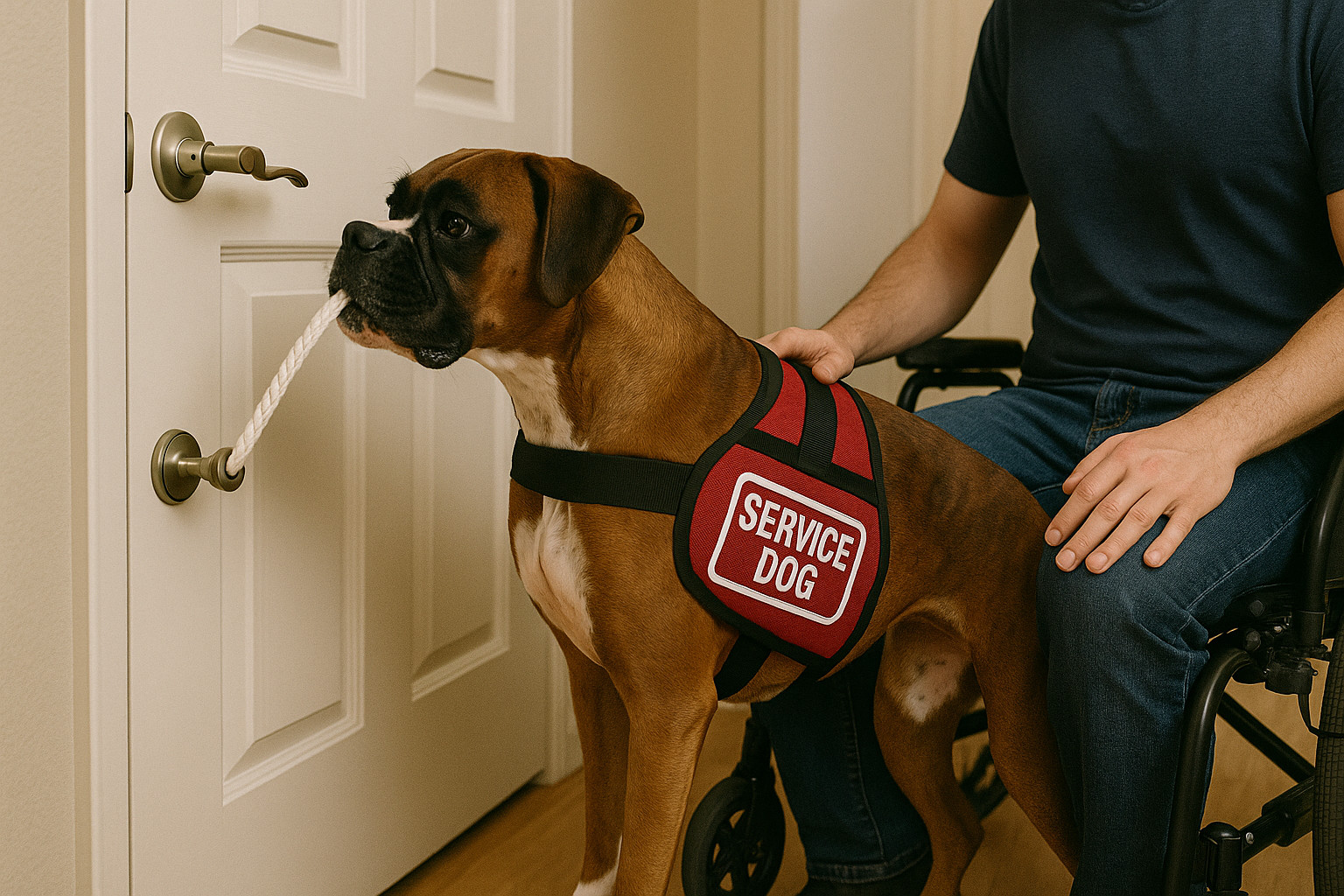
- Opening and closing doors
- Bringing a phone or emergency device
- Assisting with transfers
- Pulling a wheelchair short distances
- Delivering items to caregivers or family members
Their skills allow handlers to perform daily routines with greater autonomy.
Register Your Dog Instantly
Who Uses Wheelchair Assistance Dogs?
Handlers are individuals who use wheelchairs—either full-time or part-time. They may:
- Have limited arm strength
- Experience difficulty gripping or lifting objects
- Need assistance during transfers
- Use mobility aids only some of the time
Even if the handler is physically able to stand or walk briefly, wheelchair assistance dogs still support tasks that reduce strain and improve daily function.
Gear and Equipment for Wheelchair Assistance Dogs
These service dogs generally do not require specialized gear. However, many teams use equipment such as:
- A pull harness for assisting with wheelchair movement
- A service dog vest
- A mobility harness for opening doors or guiding movement
The type of gear used depends on the tasks the dog is trained to perform, but gear is not what determines whether the dog is a service animal—task training is.
Why Wheelchair Assistance Dogs Are Essential
These dogs offer significant advantages, including:
- Greater independence in everyday activities
- Reduced strain on the handler’s shoulders, arms, and hands
- Increased safety during transfers or complex movements
- Emotional confidence in public spaces
- Support in emergencies when immediate help is needed
Their work often improves quality of life in ways that mechanical devices alone cannot.
Flexibility in Task Training
Because each handler has unique needs, training programs for wheelchair assistance dogs are highly customized. A dog may learn:
- Only a few tasks
- A broad set of skills
- Emergency-specific tasks
- Environmental awareness for crowded or unpredictable locations
This flexibility allows the dog to seamlessly assist in the handler’s lifestyle.
Conclusion
Wheelchair assistance dogs provide invaluable support to individuals who use wheelchairs by helping with tasks like retrieving items, opening doors, and assisting with transfers. Their training is tailored to each person’s needs, allowing for greater independence, safety, and confidence. Whether performing simple tasks or highly specialized work, these service dogs play a vital role in enhancing mobility and improving quality of life.