What Are Seizure Alert Dogs?
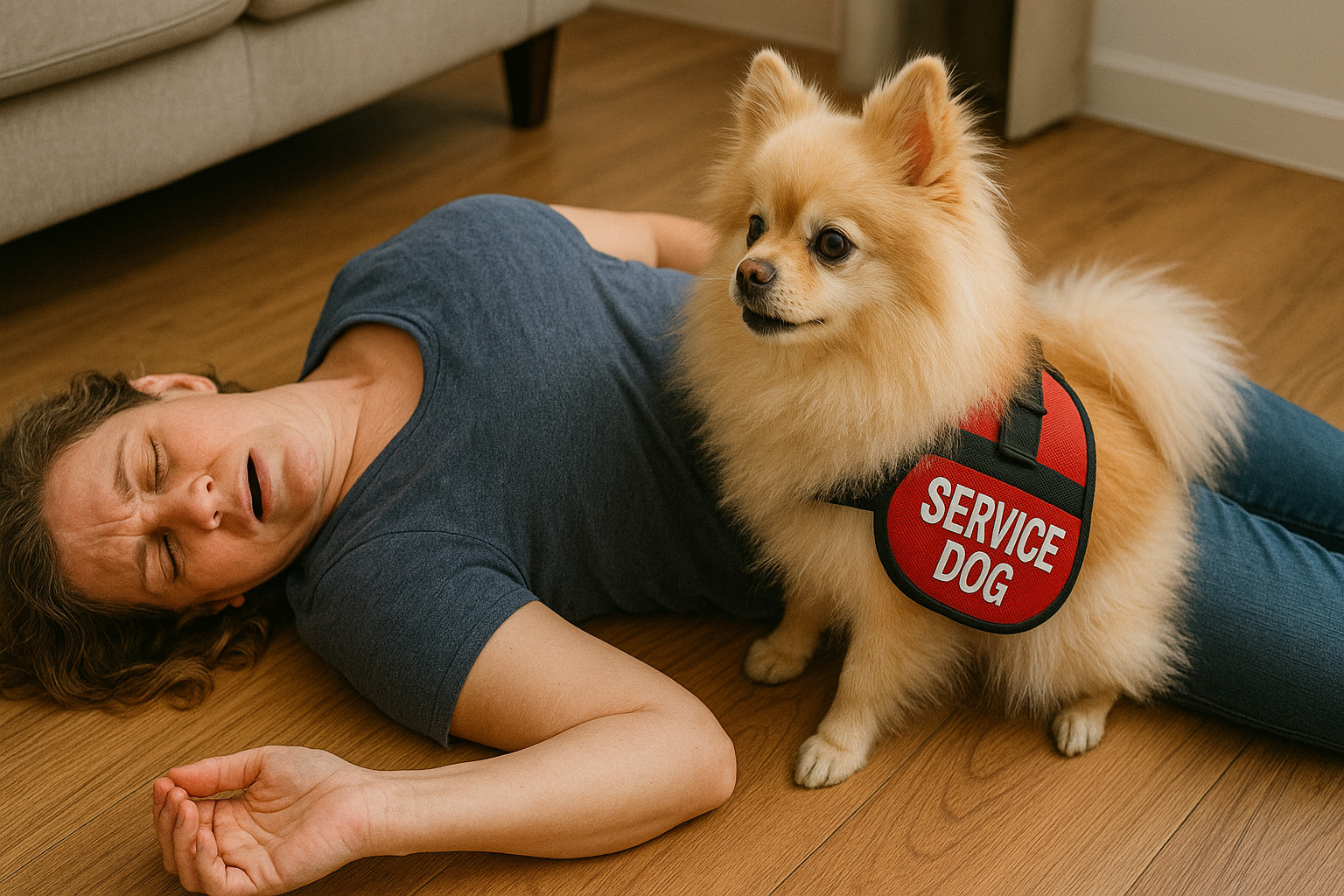
Seizure alert dogs are service animals that assist people living with seizure disorders. Their role may include both natural alerting behaviors and trained responses. While response tasks can be taught, true alerting is an intuitive ability that some dogs naturally develop through bonding and close observation of their handler.
These dogs provide safety, reassurance, and support during unpredictable medical events.
What Seizure Alert Dogs Are Trained to Do
Even though the alerting ability cannot be fully trained, the response tasks these dogs perform can be. Their work may include:
- Retrieving medication
- Bringing a nearby person for assistance
- Using a device to call 911
- Providing deep pressure stimulation to help stop or shorten a seizure
- Blocking hazards or preventing injury
- Staying beside the handler until the episode passes
Every dog is trained to meet the specific needs of its handler, making their support highly personalized.
Register Your Dog Instantly
Understanding the Difference Between Alerting and Responding
A key distinction exists:
- Alerting happens when a dog senses early changes before a seizure begins. This is a natural instinct—not something that can be reliably trained from scratch.
- Responding involves task-based actions performed during or after the episode, which can be taught.
All seizure alert dogs fall under the larger category of seizure response animals, but not every response dog has the natural ability to alert ahead of time.
Handlers Who Use Seizure Alert Dogs
The individuals who work with these dogs may or may not show visible signs of disability. Some have silent or occasional episodes; others live with more frequent or sudden seizures. These dogs provide:
- Increased independence
- Enhanced safety in public and at home
- Emotional support following an episode
- Assistance that allows the handler to recover more comfortably
Their presence often improves quality of life significantly.
Gear and Identification for Seizure Alert Dogs
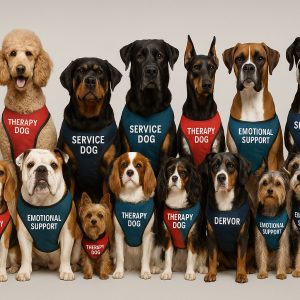
These dogs typically do not require specialized equipment. Many handlers choose to use:
- A service dog vest
- ID tags
- A simple harness
Because the tasks rely on training and instinct, not equipment, gear is optional and varies by personal preference.
Why Seizure Alert Dogs Are So Valuable
Their support makes a difference by:
- Reducing the risk of injury
- Ensuring help is obtained quickly
- Improving recovery after an episode
- Helping shorten seizures when deep pressure stimulation is used
- Creating a sense of emotional grounding during stressful moments
Their combination of training and intuition makes them uniquely capable partners.
Conclusion
Seizure alert dogs provide vital assistance to people living with seizure disorders. Through personalized response training and, in some cases, natural alerting ability, they help keep their handlers safe and supported during medical emergencies. While alerting cannot be taught directly, the tasks these dogs perform can greatly improve independence and confidence in daily life.