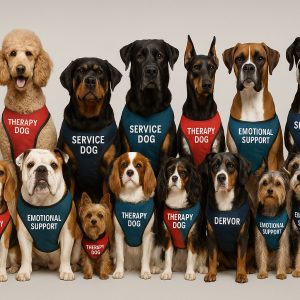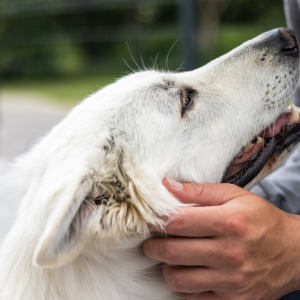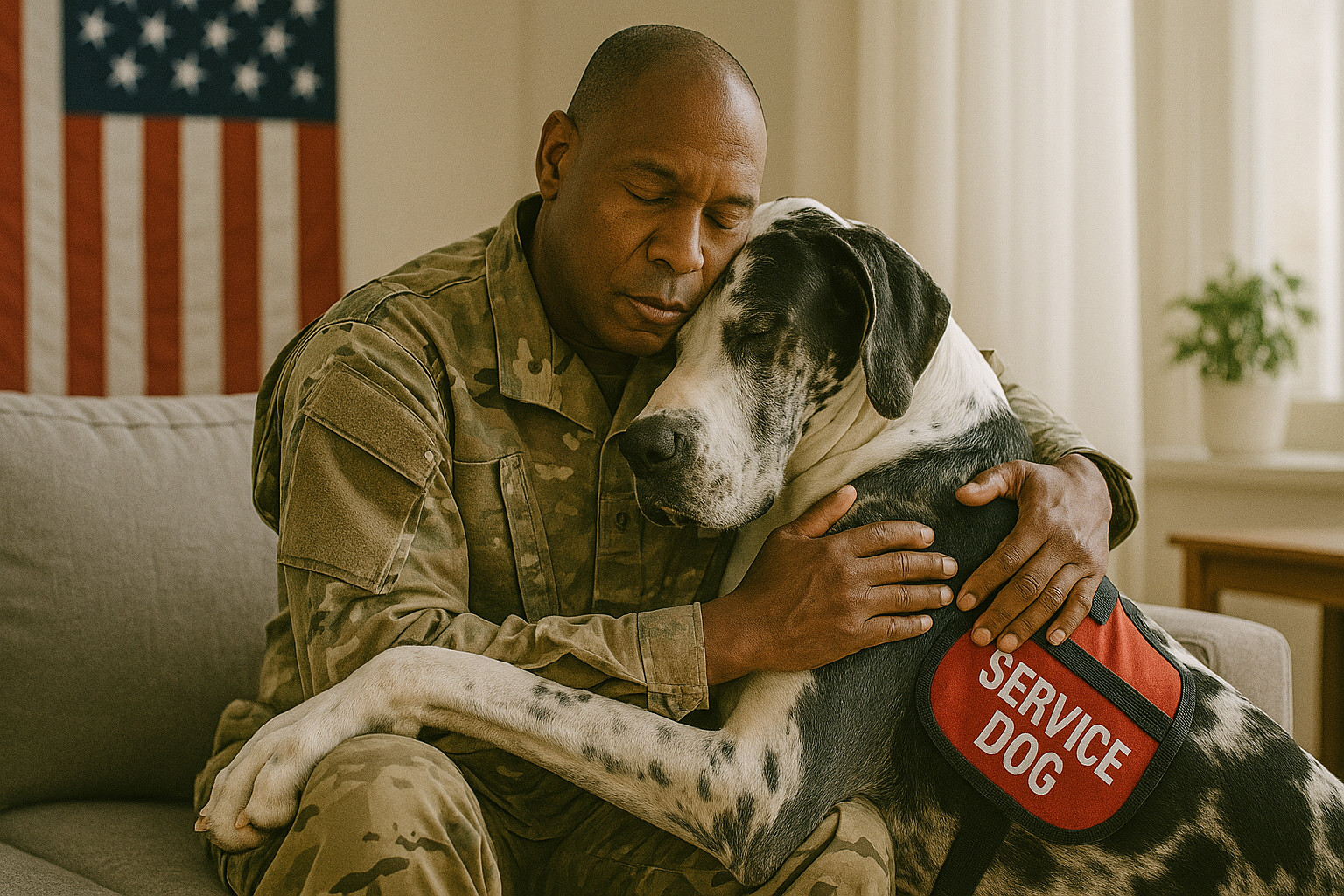
What Are Medical Alert Dogs?
Medical alert dogs (MADs) are trained service animals that assist people experiencing the emotional and psychological effects of Post-Traumatic Stress Disorder (PTSD). While the term “medical alert dog” often refers to dogs that detect physical changes, in this context it refers to animals specially trained to support individuals with trauma-related symptoms.
These service dogs help their handlers feel grounded, safe, and supported during moments of distress or emotional overwhelm.
How Medical Alert Dogs Support PTSD
Medical alert dogs for PTSD are trained to recognize early signs of stress, anxiety, or emotional dysregulation. Their work may include:
- Providing grounding through physical contact
- Interrupting panic episodes or flashbacks
- Alerting to rising anxiety
- Guiding the handler away from triggering situations
- Offering deep pressure stimulation
- Waking the handler from nightmares
- Creating personal space in crowded environments
These tasks help reduce the severity of symptoms and increase emotional stability.
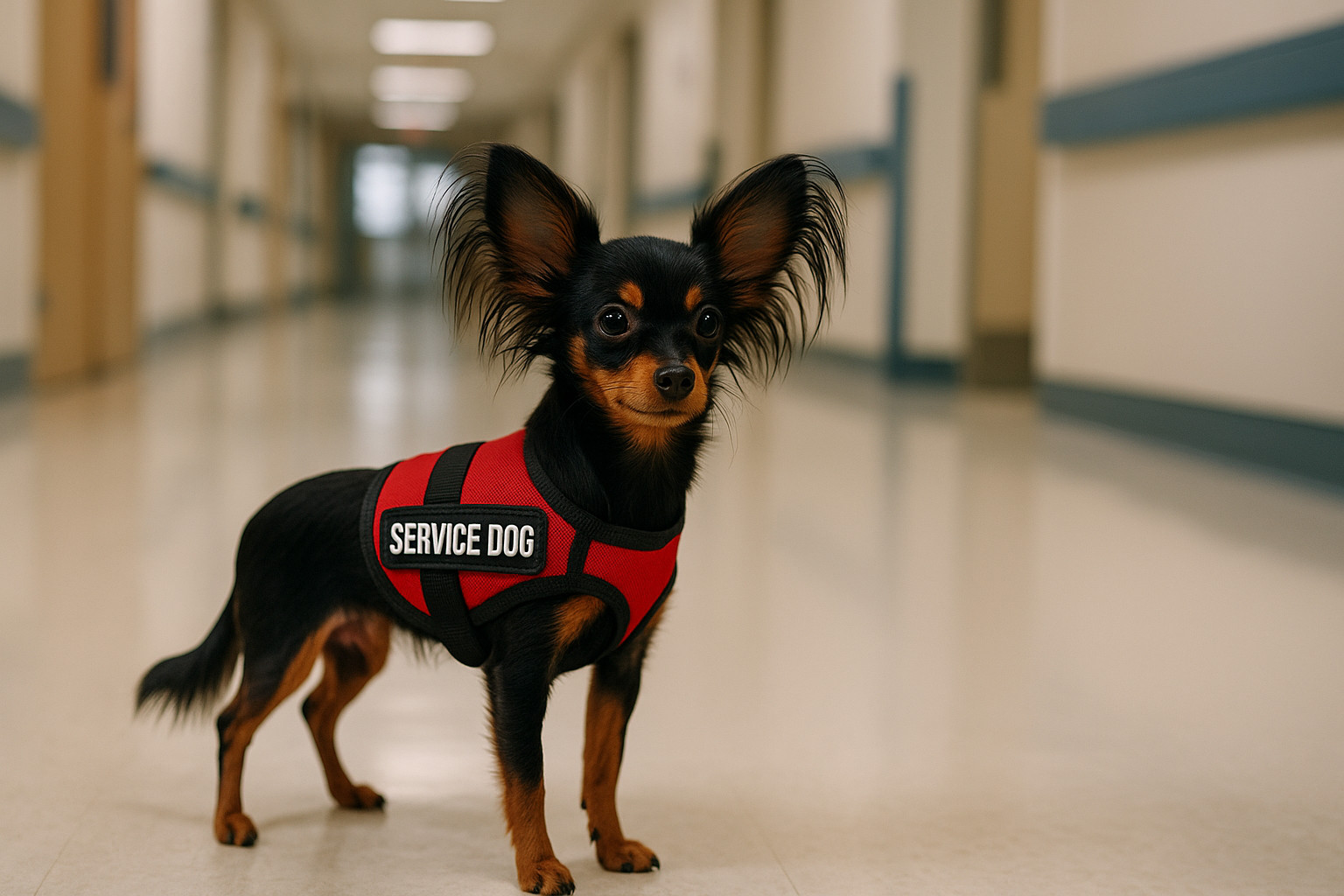
Register Your Dog Instantly
Who Uses Medical Alert Dogs?
Handlers may or may not show visible signs of disability. Many people who benefit from medical alert dogs live with:
- Post-Traumatic Stress Disorder
- Combat-related trauma
- Work-related trauma from law enforcement or emergency response
- Anxiety linked to traumatic events
MADs are increasingly used by veterans, active-duty personnel, law enforcement officers, first responders, and others who experience long-term trauma or cumulative stress.
Gear and Identification for Medical Alert Dogs
These service dogs do not require specialized equipment, though many handlers choose to use:
- A vest for visibility
- Identification patches or tags
- Harnesses designed for grounding or bracing tasks
Gear is optional; what qualifies the dog as a service animal is task-based training, not clothing.
Public Access Rights
Medical alert dogs are recognized as service dogs under federal law. This means they have full public access, including:
- Restaurants
- Stores
- Transportation
- Medical facilities
- Workplaces
- Other public areas
They must receive the same treatment and access rights as any other trained service dog.
Why Medical Alert Dogs Are Increasingly Needed
Every year, a growing number of people in high-stress careers—such as veterans, military personnel, emergency responders, and law enforcement—experience PTSD or related emotional challenges. Medical alert dogs provide:
- Daily emotional support
- Increased independence
- Improved mental clarity
- Reduced anxiety in public
- Greater confidence in overwhelming situations
Their steady presence helps many individuals regain control over their lives.
Conclusion
Medical alert dogs play an essential role in helping individuals with PTSD and trauma-related disabilities navigate daily life with greater security and emotional stability. Through specialized training, grounding techniques, and consistent support, these dogs assist people who might otherwise struggle with the invisible impact of trauma. Their importance continues to grow as more individuals in high-stress professions seek effective, compassionate forms of assistance.