What Are Hearing Dogs?
Hearing dogs are specially trained service animals that help their handlers stay aware of important sounds in their environment. These dogs work with people who are Deaf or hard of hearing, making everyday activities safer and more accessible.
While some disabilities are visible, hearing loss often is not. This means the presence of a working dog may be the only indication that someone depends on sound alerts.
What Hearing Dogs Are Trained to Detect
A hearing dog can learn to recognize a wide range of everyday sounds, including:
- Alarm clocks or timers
- Doorbells and knocking
- Phones or text alerts
- Cars approaching
- Emergency alarms
- A person calling their name
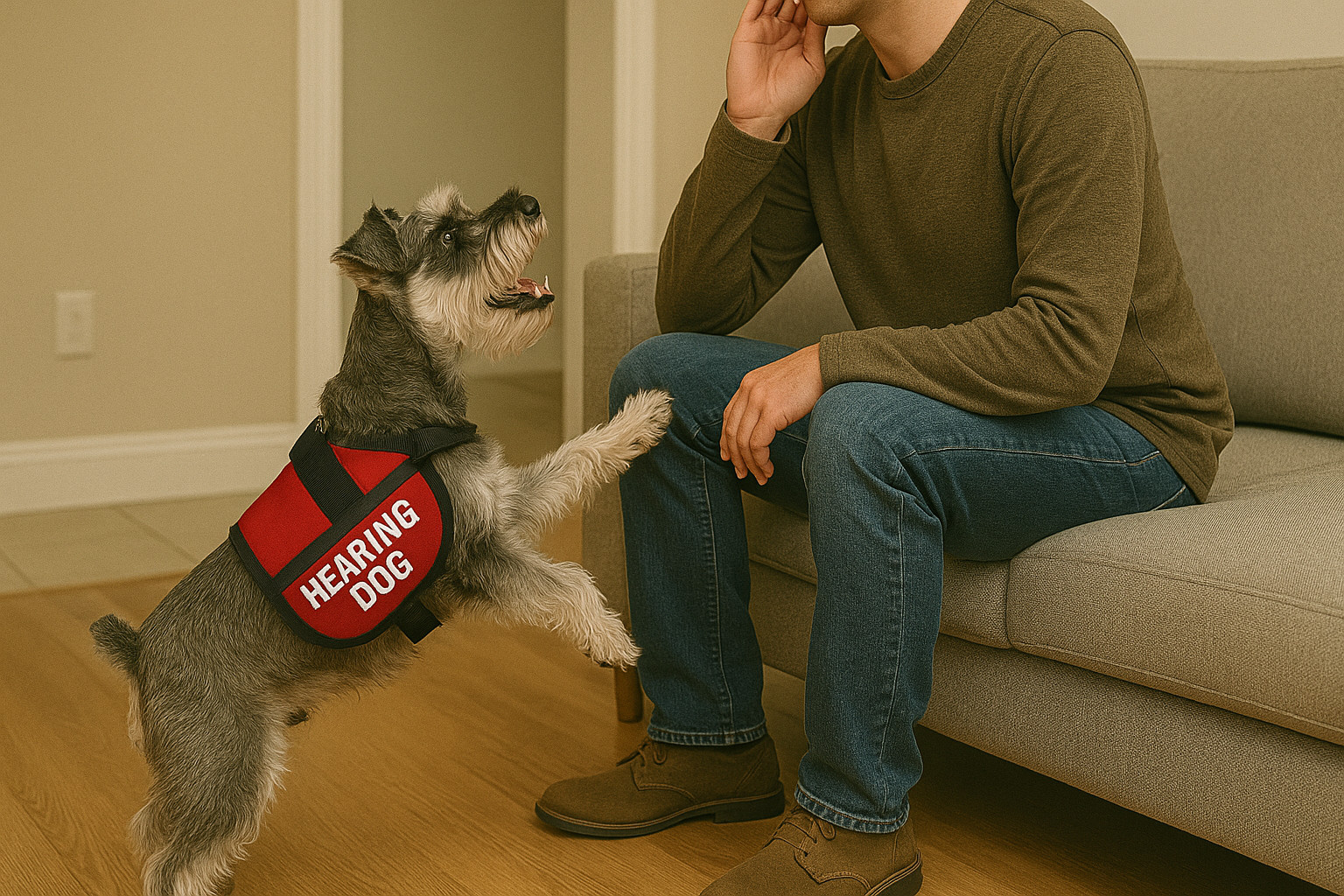
When the dog hears the trained sound, it alerts the handler through a physical cue—such as nudging, pawing, or leading them toward the source.
Register Your Dog Instantly
Because these tasks can be personalized, each dog is trained for the specific needs of its handler.
Handlers Who Use Hearing Dogs
People who rely on hearing dogs may not show any visible signs of disability. Some may speak verbal English; others may use sign language or alternative communication methods. The dog’s role remains the same: to provide consistent sound awareness.
These dogs offer independence, safety, and the peace of mind that comes from knowing essential sounds will not be missed.
Gear and Identification for Hearing Dogs
Unlike some other types of service animals, hearing dogs do not require specialized gear to perform their tasks. However, several states designate bright orange as the recognized color for hearing dog identification.
Handlers may choose to use:
- An orange vest
- A simple harness
- Identification tags
While gear is optional, many handler teams use it to help the public recognize the dog’s working status.
How Hearing Dogs Work in Public
Because sound cues are not always visible, it may not be obvious what the dog is responding to at any given moment. A hearing dog could be:
- Alerting to a ringing phone
- Notifying the handler of someone calling their name
- Responding to an emergency alarm
- Reacting to a car backing up nearby
Even if observers don’t notice the trigger, the dog is often actively working. This is why giving a service dog space and avoiding distractions is so important.
Training and Skills of Hearing Dogs
Training focuses on environmental awareness and reliable communication. These service dogs learn to:
- Distinguish specific sounds
- Interrupt their handler gently
- Guide the handler toward (or away from) a sound source
- Ignore unrelated noises
- Work confidently in busy environments
With consistent training, hearing dogs become skilled partners who support independence and enhance personal safety.
Conclusion
Hearing dogs provide essential assistance to people who are Deaf or hard of hearing by alerting them to important sounds. Their training is tailored to the unique needs of each handler, making everyday life safer and more manageable. Whether responding to alarms, knocking, phones, or environmental cues, these dogs are constantly working—often in ways others may not see.