What Are Diabetic Alert Dogs?
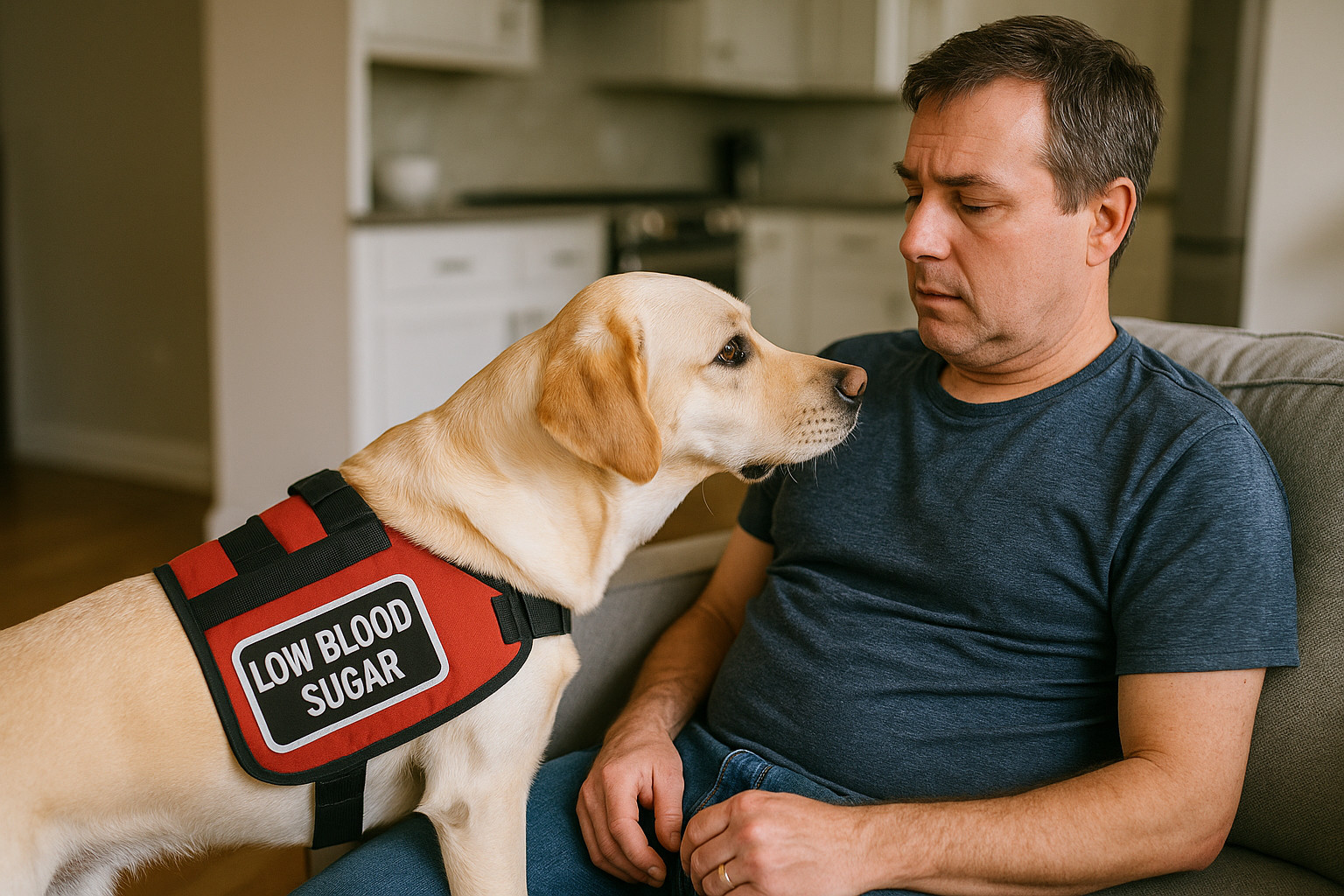
Diabetic alert dogs—commonly called DADs—are service animals trained to detect significant changes in blood sugar levels. These dogs assist people with diabetes by alerting them when glucose levels move outside a safe range.
Their early warnings can help prevent medical emergencies, providing an extra layer of safety and independence for their handlers.
How Diabetic Alert Dogs Detect Blood Sugar Changes
DADs learn to recognize subtle scent changes that occur when glucose levels rise too high or drop too low. When they identify these shifts, they may:
- Nudge or paw at their handler
- Bark or whine to get attention
- Retrieve emergency supplies
- Press a special K-9 Alert Phone to call 911
- Fetch another person for assistance
Their rapid response helps ensure that action can be taken before symptoms become severe or life-threatening.
Register Your Dog Instantly
Who Uses Diabetic Alert Dogs?
People of all ages may work with diabetic alert dogs—from young children to seniors. Many individuals with diabetes do not show visible signs of disability, which makes these service dogs especially valuable when unpredictable glucose changes occur.
DADs offer:
- Increased safety during daily activities
- Support during sleep when episodes may go unnoticed
- Peace of mind for families and caregivers
- Greater independence and confidence
Their ability to detect changes early makes them an important part of diabetes management for many individuals.
Gear and Identification for Diabetic Alert Dogs
These service dogs usually do not rely on specialized gear. However, many handlers choose to use:
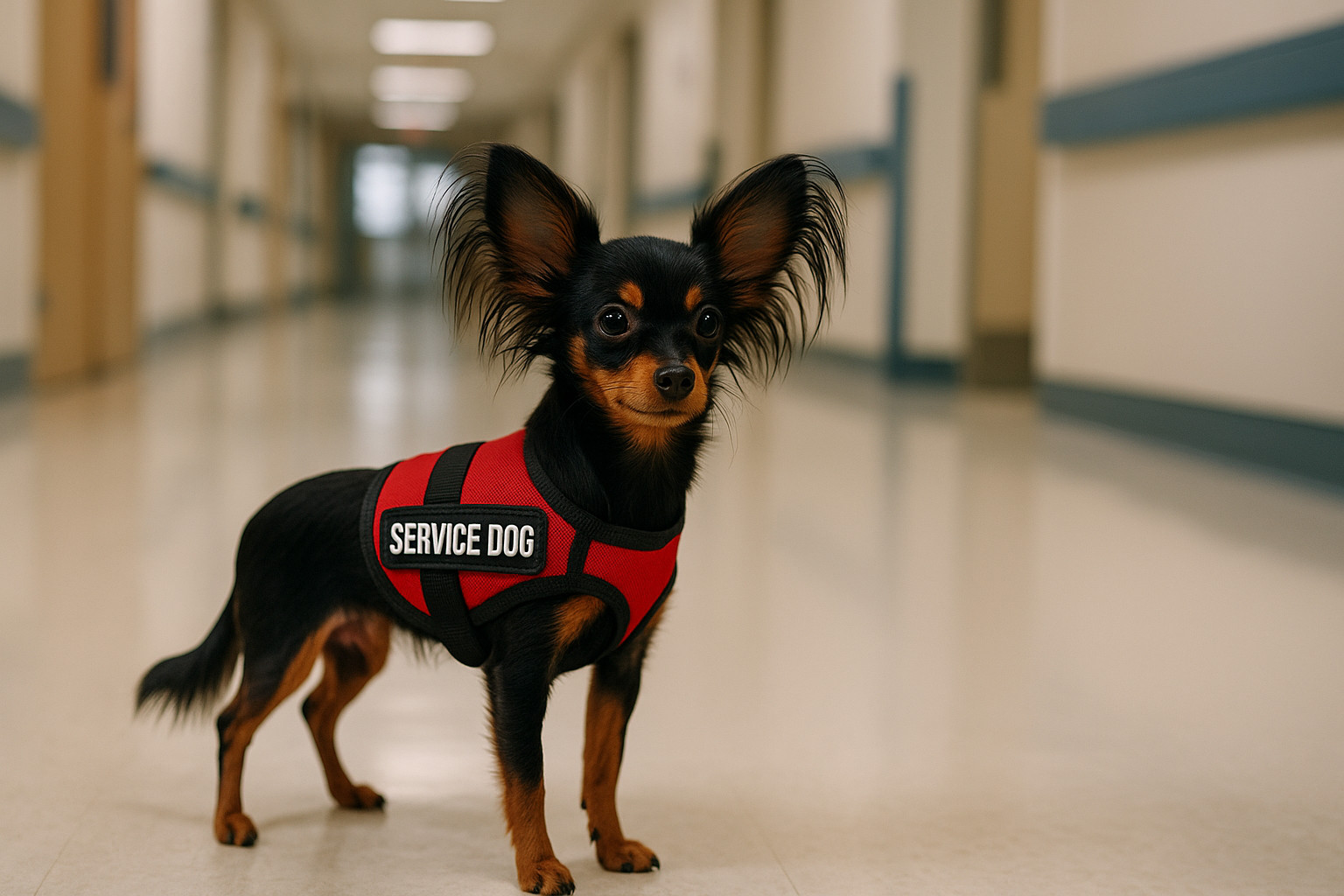
- A vest
- Basic service dog identification
- Emergency medical instructions
Because a diabetic alert dog may be the first point of contact in an emergency, carrying a written protocol inside the vest can help medical teams respond quickly and accurately.
Training and Reliability of Diabetic Alert Dogs
The training process focuses on:
- Identifying specific glucose-related scents
- Reinforcing consistent alerts
- Teaching the dog to perform emergency tasks
- Helping the dog recognize nighttime episodes
- Encouraging strong bonds between dog and handler
Although technology plays an important role in diabetes care, DADs offer something unique: real-time scent detection combined with intelligent, purposeful behavior.
Why Diabetic Alert Dogs Are Also Called Blood Sugar Alert Dogs
The terms diabetic alert dog and blood sugar alert dog refer to the same type of service animal. Both highlight the dog’s primary function—recognizing and alerting to blood sugar changes.
Different programs and organizations may use one term or the other, but the job remains the same.
Conclusion
Diabetic alert dogs are trained to detect dangerous shifts in blood sugar levels and provide vital assistance during emergencies. Their ability to alert early—combined with skills such as fetching help or activating emergency devices—makes them powerful partners for people managing diabetes. From young children to older adults, many individuals rely on these remarkable dogs for safety, confidence, and peace of mind.