What Are Autism Assistance Dogs?
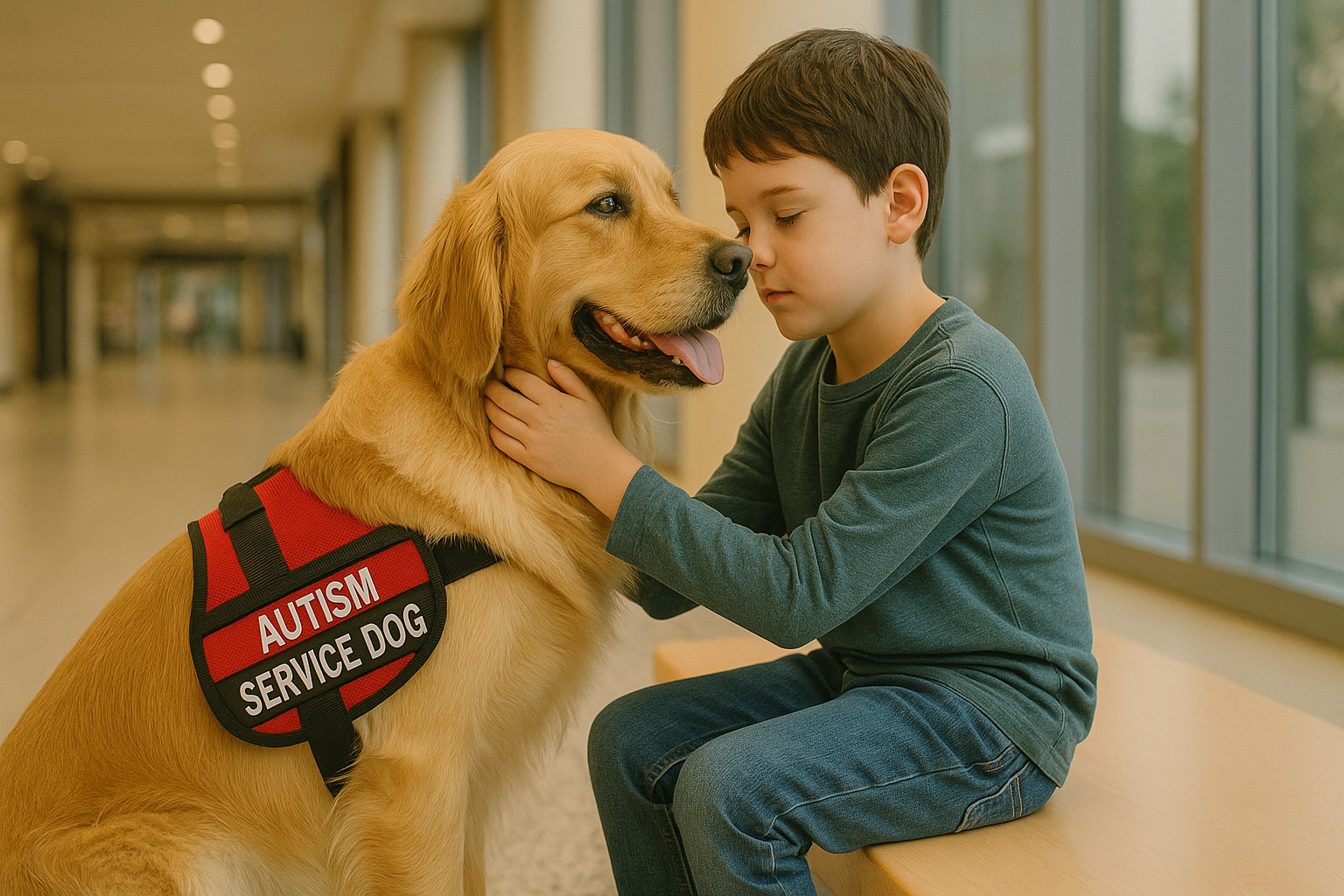
Autism assistance dogs are trained service animals that support individuals on the autism spectrum by offering calming, grounding, and safety-related assistance. Their work often includes tactile stimulation, deep pressure therapy, and emotional regulation.
These dogs provide comfort, help reduce sensory overload, and support greater independence in daily life.
Tasks Autism Assistance Dogs Perform
These service dogs may perform a variety of tasks tailored to the handler’s needs, including:
- Deep pressure stimulation to reduce anxiety or sensory overwhelm
- Tactile grounding, such as leaning or nudging, to maintain focus
- Teaching life skills through routine-based interactions
- Maintaining boundaries in public or social settings
- Tracking a “runner”—locating a child or adult who has wandered or bolted
- Providing stability and reassurance during transitions or stressful events
Because autism presents differently in every person, task training is highly individualized.
Register Your Dog Instantly
Who Uses Autism Assistance Dogs?
Handlers are often children, but teens and adults also benefit greatly. A handler may:
- Show no visible signs of disability
- Communicate verbally or non-verbally
- Experience sensory challenges
- Have anxiety or difficulty in unfamiliar environments
- Need support with boundary awareness or transitions
These dogs are trained to respond to a wide range of needs, with their work adjusted to each individual’s developmental and emotional profile.
Gear and Identification for Autism Assistance Dogs
These dogs typically do not require specialized gear. However:
- If the handler is young,
- Or non-verbal,
- Or may be unable to answer emergency questions,
the dog should carry contact information and emergency protocol documents in its vest. This helps first responders or community members provide quick and accurate help if needed.
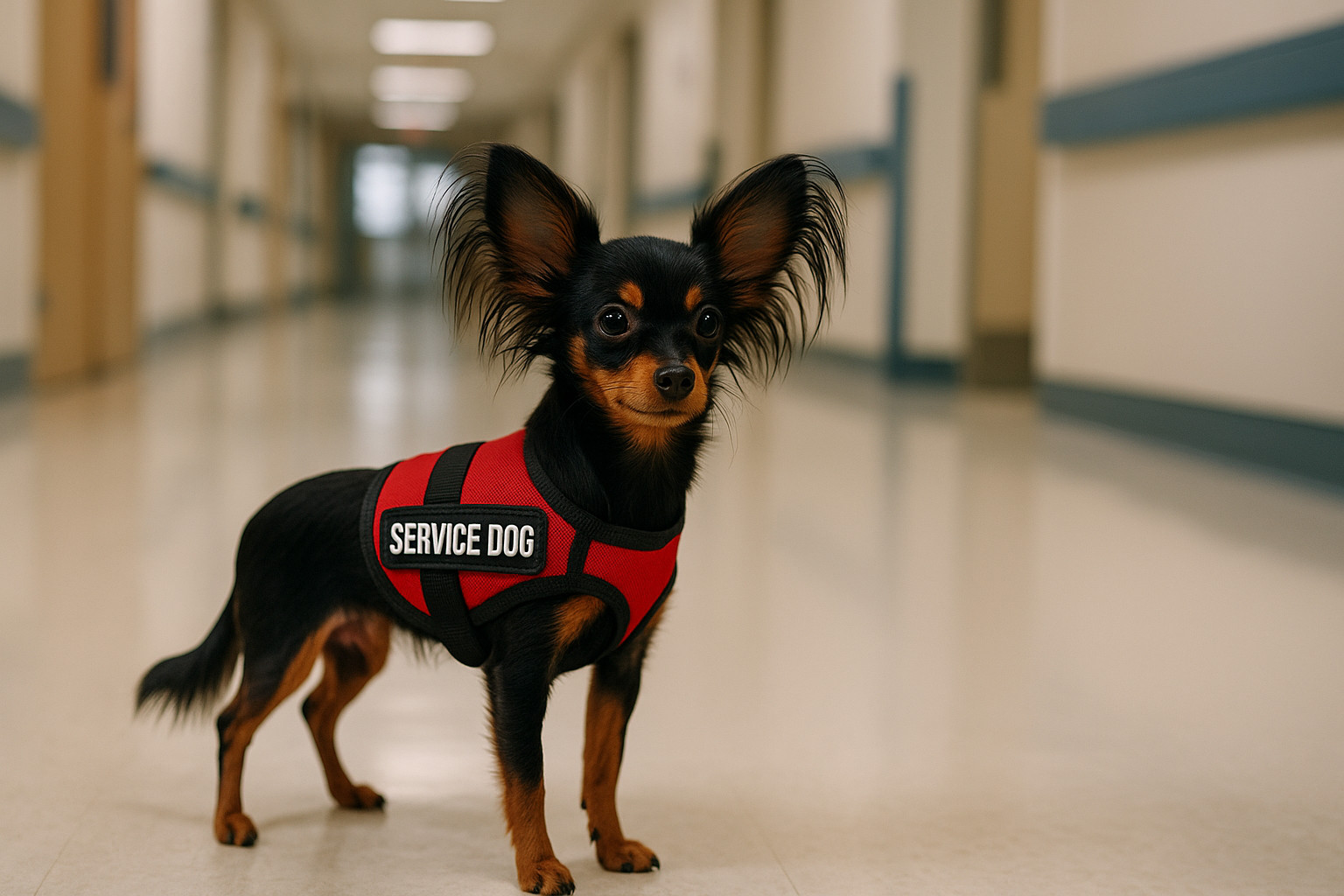
Gear may simply be a vest, harness, or collar identification—nothing about their clothing determines their legal status.
Why Autism Assistance Dogs Are Effective
These service dogs support individuals on the autism spectrum in several meaningful ways:
- Calming sensory overload
- Providing routine and structure
- Offering reassurance during transitions
- Promoting social engagement
- Supporting emotional regulation
- Helping prevent unsafe wandering
Their presence often reduces stress for families and caregivers, contributing to improved safety and confidence.
Autism Assistance Dogs and Sensory Processing Disorder Dogs
Dogs trained for Sensory Processing Disorder (SPD) perform nearly identical tasks and fall under the same general service category. Both types of dogs are trained to:
- Offer deep pressure therapy
- Help regulate sensory input
- Provide grounding during overwhelming moments
- Support behavioral and emotional stability
Because the needs overlap significantly, training programs often prepare these dogs for both roles.
Conclusion
Autism assistance dogs play an essential role in helping individuals on the autism spectrum navigate daily life with greater comfort, confidence, and safety. Through deep pressure stimulation, boundary maintenance, sensory grounding, and emotional support, these service dogs offer life-changing benefits to children and adults alike. Their work not only enhances independence but also strengthens the connection between handlers, families, and the world around them.