What Are Detection Dogs?
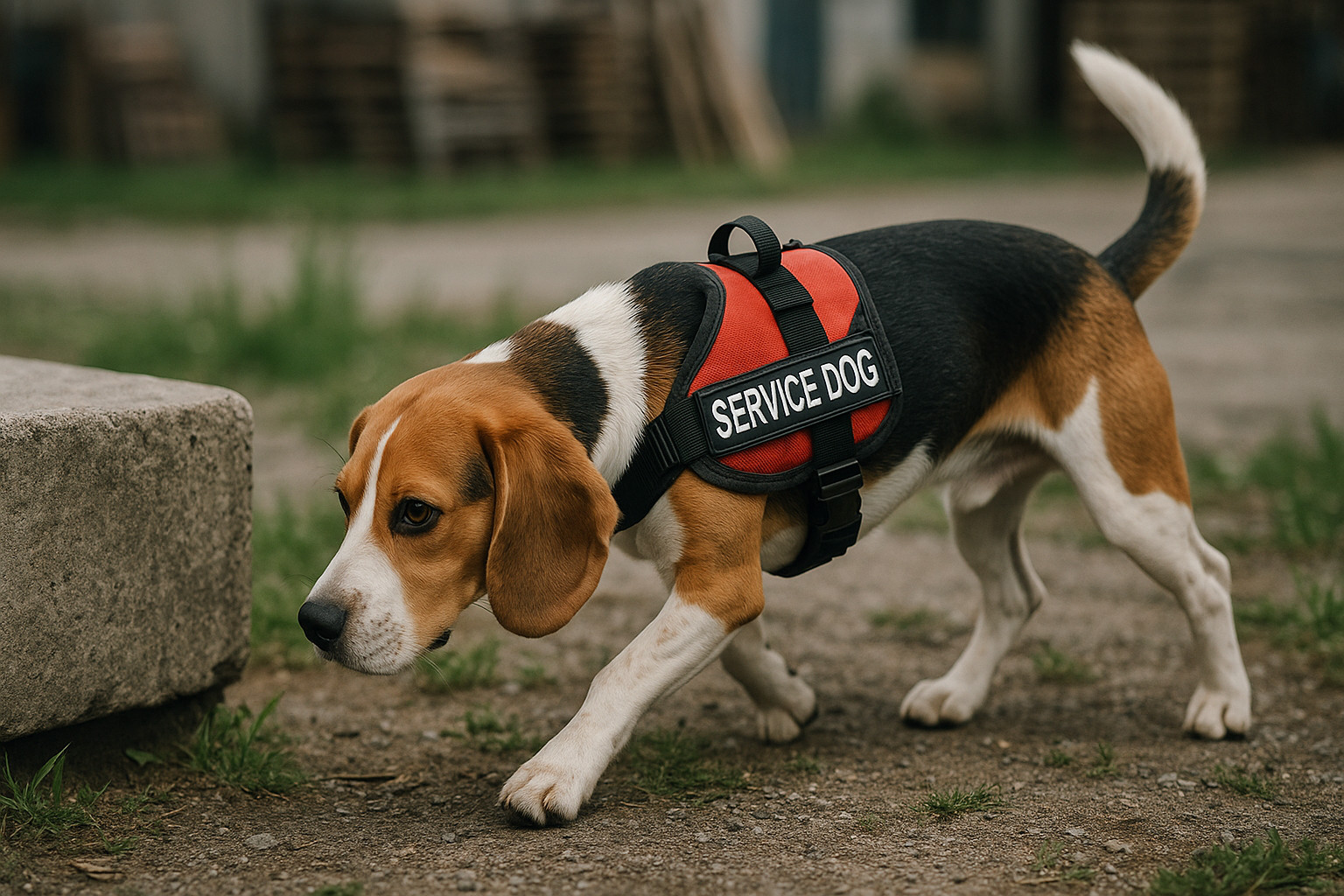
Detection dogs are specially trained canines that use their powerful sense of smell to identify specific scents or substances. Their noses contain hundreds of millions more scent receptors than humans, allowing them to distinguish countless odor combinations with incredible accuracy.
A detection dog can be trained to sniff out a single substance or an entire group of related scents, depending on its role and training program.
How Detection Animals Use Their Exceptional Sense of Smell
Few animals on Earth can compete with the scenting abilities of detection dogs. Their advanced olfactory system enables them to pick up faint chemical traces that humans cannot detect.
This heightened sense of smell allows detection dogs to:
Register Your Dog Instantly
Locate substances hidden underground or underwater
Identify scents masked by strong odors
Detect low-concentration chemicals
Work in crowded, noisy, or complex environments
Their accuracy makes them indispensable in fields where speed and precision are critical.
Substances Detection Dogs Commonly Identify
Detection dogs are trained to locate a wide variety of substances, including:
Illegal substances
- Illegal drugs such as cocaine, heroin, methamphetamine, and cannabis
Explosives
- Bombs, gunpowder, and chemical explosive components
Human biological materials
- Blood, human remains, and evidence at crime scenes
Medical and biological scents
- Cancer cells
- Bacteria
- Viruses (in limited, specialized programs)
Wildlife and environmental targets
- Certain insects such as bed bugs
- Animal feces
- Endangered species or wildlife contraband
Because detection dogs can be trained for highly specific scent recognition, their applications continue to expand each year.
Training Methods for Detection Dogs
Training detection dogs requires time, patience, and consistency. Dogs typically begin with basic obedience, then progress to more advanced scent discrimination exercises.
Key components of detection dog training include:
- Target scent imprinting: Teaching the dog to recognize a specific odor
- Search patterns: Training the dog to work methodically
- Reward systems: Reinforcing behaviors with toys or treats
- Environmental conditioning: Exposing dogs to loud sounds, crowds, vehicles, etc.
With this training, detection dogs learn to communicate their findings through behaviors such as sitting, barking, or pointing.
Where Are They Used
Detection dogs play a vital role in numerous industries:
Law enforcement
- Drug detection
- Bomb squads
- Search and rescue
- Crime scene investigation
Wildlife biology and conservation
- Locating endangered species
- Identifying invasive species
- Tracking wildlife scat for research
Health care
- Early cancer detection programs
- Identifying bacterial infections
- Supporting clinical research
Their versatility and accuracy make detection dogs valuable across a wide range of public safety, scientific, and medical fields.
Why Are They Essential
Detection dogs provide:
- Faster and more accurate scent detection than most technological tools
- Non-invasive medical detection methods
- Enhanced public safety
- Support for scientific research
- Critical aid in criminal investigations
Their unique abilities often surpass machines, making them irreplaceable partners in many professions.
Conclusion
Detection dogs are extraordinary animals whose superior sense of smell allows them to detect substances that humans cannot. From law enforcement and wildlife conservation to emerging medical science, detection dogs continue to play an invaluable role in keeping communities safe and advancing human knowledge. As research and training methods evolve, detection dogs will only become more essential in the future.