Description
Key Benefits of Registration
- Public Access Rights: Ensures your dog can accompany you in places pets aren’t allowed, like shops, restaurants, and public transport, under the Americans with Disabilities Act (ADA).
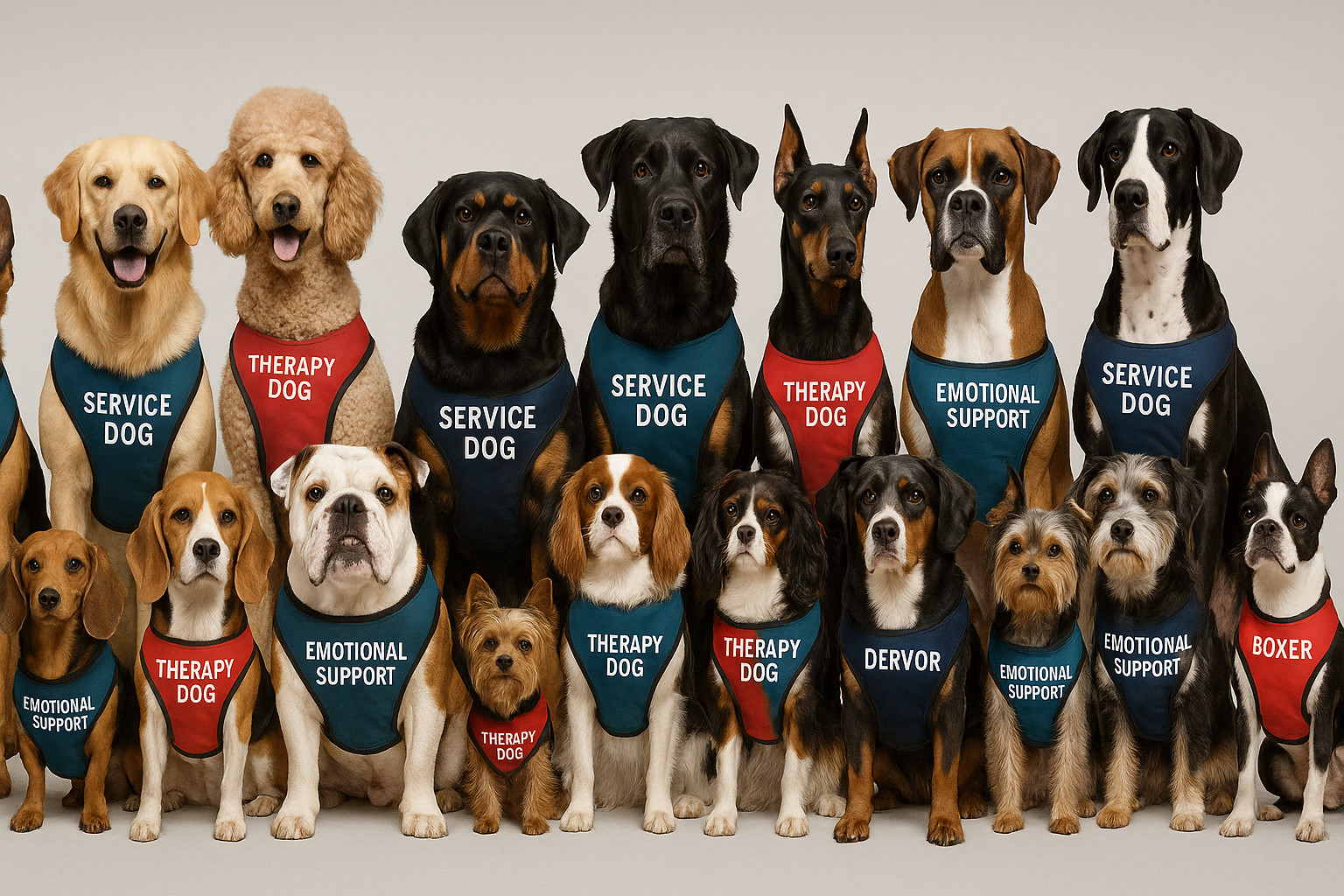
- Prevents Hassle: Vests, tags, and ID cards provided through registration visibly identify your dog as a working animal, deterring strangers from petting or distracting it.
- Emergency Preparedness: Helps first responders identify your dog as a service animal in emergencies, ensuring they know to assist both you and the dog.
- Tax Deductions: The IRS allows deductions for service dog-related expenses (purchase, training, care) if you can prove the dog’s necessity for a disability.
- Travel Ease: Documentation can smooth the process when flying or using public transportation, as it serves as proof of your dog’s working status.
- Peace of Mind: Reduces the stress of repeatedly proving your dog’s status and provides support resources from registry organizations.
Important Distinction: ADA vs. Registries - The ADA does not require service dogs to be registered or certified; it only requires them to be individually trained to do work or perform tasks for a person with a disability.
Registries offer optional documentation (IDs, certificates, vests) that make it easier to demonstrate your dog’s legitimate working status to skeptical staff or the public, but they aren’t legally mandated by the ADA for public access.
These Registries are the most popular and provide instant registration services and optional items (IDs, vests, tags) to help identify a service dog as working, reducing hassle in public or housing situations.
Choose one below to register your dog.