What Are Brace Mobility Support Dogs?
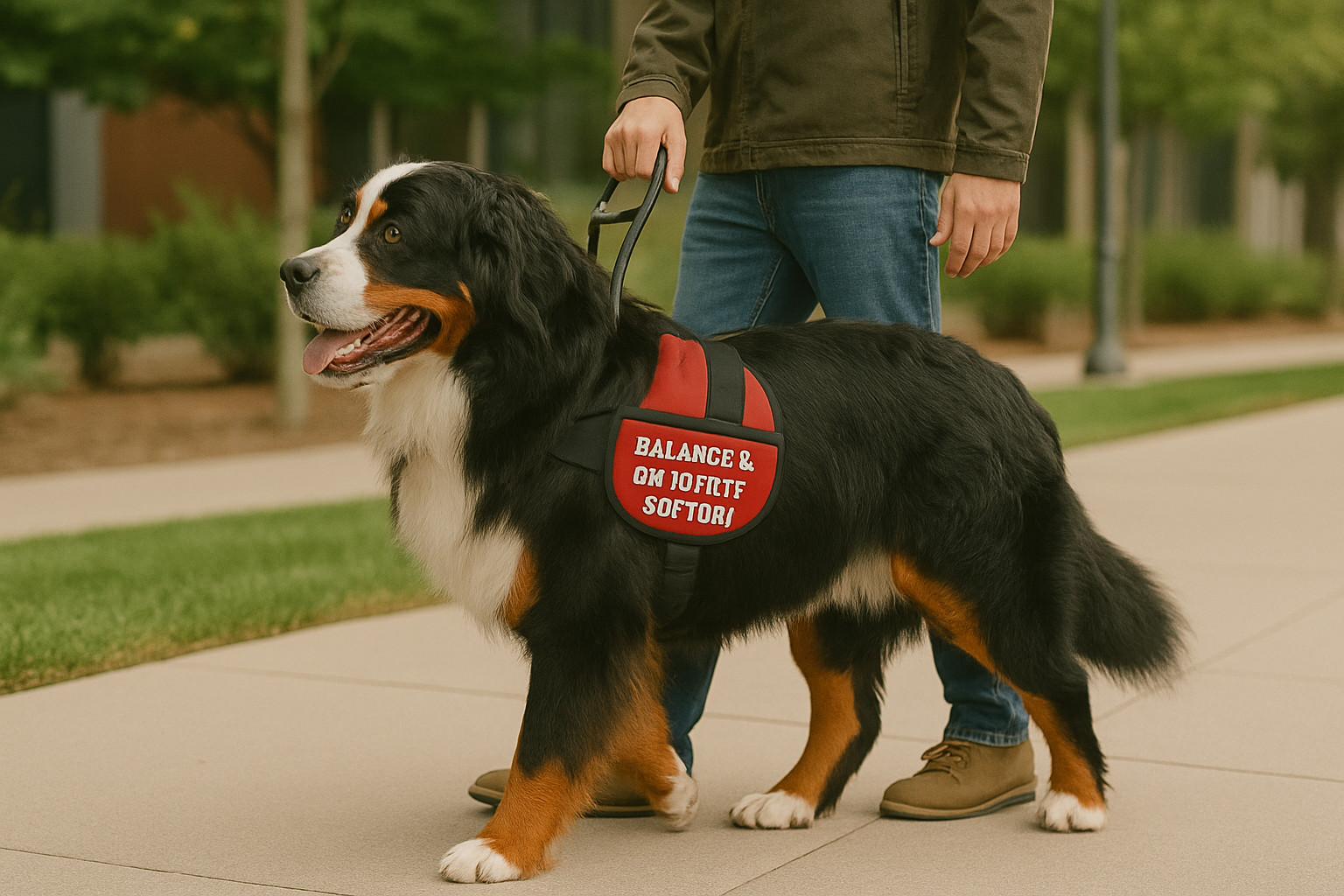
Brace mobility support dogs—often called BMSDs—are service dogs trained to help individuals who experience balance problems or mobility limitations due to a disability. Their main role is to provide bracing or counterbalancing so their handler can move more safely and confidently.
In addition to physical stabilization, many of these dogs also perform a variety of daily tasks.
Tasks Brace Mobility Support Dogs Are Trained to Perform
BMSDs may support their handler by:
- Providing a stable brace to help prevent falls
- Offering counterbalance while walking
- Retrieving dropped items
- Opening or closing doors
- Assisting during emergencies
- Helping with mobility transitions, such as standing up
These tasks reduce physical strain and improve everyday independence.
Register Your Dog Instantly
Who Uses Brace Mobility Support Dogs?
People with a wide range of disabilities may rely on brace mobility support dogs, including individuals who:
- Experience chronic balance problems
- Have neurological disorders
- Are recovering from injury
- Live with muscle weakness or joint instability
- Use mobility aids such as canes or walkers
Handlers vary in age, mobility level, and disability presentation, but all benefit from the physical support these dogs provide.
Size Requirements for Brace Mobility Support Dogs
Because they support a person’s body weight, size and structure are important. In general, a BMSD must be:
- At least 23 inches tall at the shoulder
- Around 55 pounds or more
- Larger if the handler is above average size
These requirements help ensure the dog can provide bracing safely without risk of injury to either partner.
Gear and Harnesses for Brace Mobility Support Dogs
Most brace mobility support dogs wear specialized equipment designed for safe weight distribution. This may include:
- A brace harness
- A rigid or semi-rigid mobility handle
- A stability-support vest
However, not all BMSDs wear a brace harness at all times. A dog that isn’t wearing its gear may still be a fully trained mobility support animal.
Proper fitting is essential, as incorrect gear can strain the dog or reduce effectiveness.
How Brace Mobility Support Dogs Improve Daily Life
The support these dogs provide allows their handlers to:
- Walk more steadily
- Reduce fall risks
- Move with greater confidence in public
- Rely less on caregivers
- Navigate daily tasks with increased independence
The combination of physical support and companionship often creates a significant improvement in quality of life.
Training and Temperament Requirements
A brace mobility support dog must have:
- Excellent obedience
- A calm, steady temperament
- Proper physical structure
- Confidence in busy or unpredictable environments
- Reliability when performing tasks that affect safety
Training is highly detailed and focused on safety for both the dog and the handler.
Conclusion
Brace mobility support dogs are remarkable service animals trained to provide essential bracing and balance assistance for people with mobility disabilities. With specialized harnesses, tailored training, and the strength to support their handlers safely, BMSDs help individuals navigate daily life with increased stability, independence, and confidence.